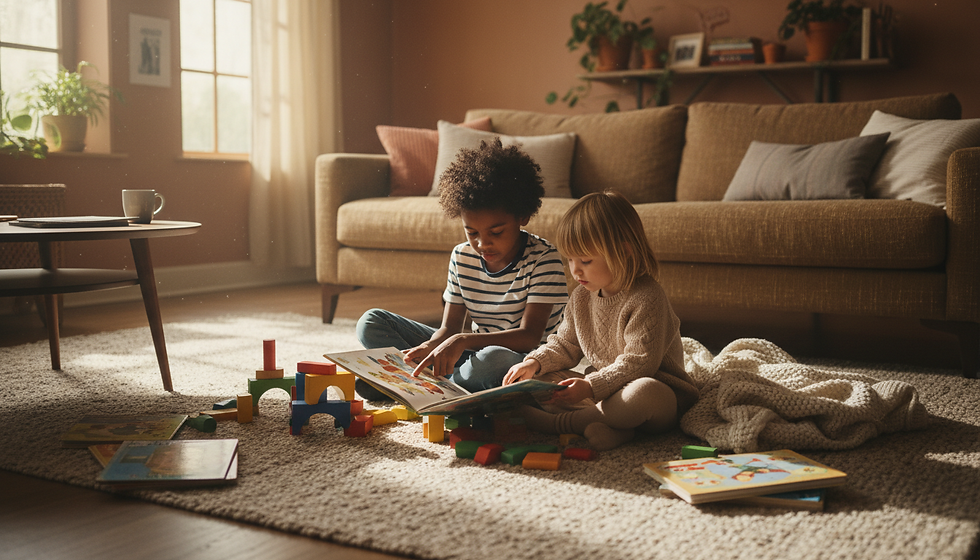
The Sibling Side of ABA What Brothers and Sisters May Be Feeling

When one child is receiving ABA therapy, so much attention naturally goes toward appointments, goals, routines, communication, behavior plans, school updates, and the daily work of helping that child feel safe and supported.
And often, somewhere nearby, a brother or sister is taking it all in.
They may be adjusting quietly. They may be helping more than anyone realizes. They may be proud, confused, protective, annoyed, worried, and deeply loving, sometimes all in the same afternoon.
Their inner experience can go unspoken, not because it does not matter, but because family life is already full. Parents and caregivers are often doing their best to meet many needs at once. This first post in our sibling support series is simply here to make room for what siblings may be feeling.

Siblings can hold more than one feeling at the same time
Children are capable of complex feelings, even when they do not have adult words for them.
A sibling might adore their brother or sister and still wish for more one-on-one time with a parent. They might feel proud after seeing a new skill and also feel frustrated when plans change. They might want to help, then feel tired of helping.
That mix does not mean something is wrong.
It means the sibling relationship is real.
Most sibling relationships include closeness, irritation, loyalty, competition, tenderness, and conflict. When one child in the family receives ABA therapy, those ordinary sibling feelings may show up around therapy schedules, different expectations, public moments, or how parent attention gets divided.
The feelings themselves are not a problem to solve. They are part of the sibling’s experience.
For many parents, naming this can bring a little relief. It gives language to something you may have sensed in small moments, like a quiet face in the car, a sharp comment at dinner, or a child suddenly asking, “Why do they get to do that?”
What brothers and sisters may be feeling
Every child is different. Age, temperament, birth order, family culture, and the sibling relationship all shape how a brother or sister makes sense of ABA therapy and the child receiving it.
Still, some feelings come up often.
Pride and protectiveness
Many siblings feel genuine pride in their brother or sister.
They may celebrate a new word, a smoother transition, a brave moment at the store, or a skill that took a long time to build. They may notice progress in ways adults do not, because they live in the small everyday moments.
They may also become protective.
A sibling might correct another child who is unkind. They might explain, “That is just how my brother asks for space,” or “My sister does not like loud sounds.” They may watch closely in public places, ready to step in if something feels uncomfortable.
This protectiveness can come from love. It can also feel like a lot for a child to carry, especially if they start to believe they need to monitor every situation.
Confusion about different routines and reactions
Siblings may wonder why family rules do not always look the same for everyone.
Why does one child get a visual schedule? Why do they get extra time with a tablet during a hard transition? Why do parents respond calmly to one behavior but set a firmer limit with another child?
Even when there are thoughtful reasons, siblings may not see the whole picture.
They may notice that routines are different, but not understand why. They may notice that parents choose their words carefully during certain moments. They may pick up on a plan without knowing there is a plan.
This can feel confusing, especially for younger children who are still learning about fairness.
To a child, “fair” often means “the same.” In many families, support needs to be individualized. That can be hard for siblings to understand without simple, repeated explanations.

Jealousy or feeling overlooked
A sibling may feel jealous when therapy, appointments, parent meetings, or behavior support take up a lot of time and energy.
They may not say, “I feel overlooked.”
They may say, “You always help them first.”
They may interrupt during a therapy session. They may become extra silly when a parent is talking with a provider. They may complain about going to another appointment, even when they understand why it matters.
Jealousy does not mean a sibling is selfish. It often means they are noticing where attention goes and wondering where they fit.
Children need to feel seen in ordinary ways. A quick look across the room. A private joke. A few minutes at bedtime. A parent remembering the detail they shared earlier.
When life is busy, those moments can be harder to protect. That does not mean parents are failing. It means the family system is holding a lot.
Worry about their sibling’s wellbeing or the future
Some siblings think ahead.
They may worry when their brother or sister has a hard moment. They may ask if therapy will help forever. They may wonder what school, friendships, or adulthood will look like.
Older siblings, especially, may quietly ask themselves future-focused questions.
Will I need to take care of them someday? Will they be okay without Mom or Dad? What happens if other people do not understand them?
These thoughts can be tender and heavy. A sibling may not bring them up because they do not want to upset anyone. They may also assume everyone else is already thinking about the same things.
Embarrassment in public, followed by guilt
A sibling may sometimes feel embarrassed in a store, at a playground, during a family gathering, or around peers.
Maybe people stare. Maybe a plan changes suddenly. Maybe their brother or sister communicates distress in a way others do not understand. Maybe the sibling wants to disappear for a minute, then immediately feels guilty for feeling that way.
This is one of the harder feelings for siblings to admit.
They may love their brother or sister deeply and still feel uncomfortable when other people are watching. They may feel protective and embarrassed at the same time. They may feel ashamed of their own reaction.
That is a lot for a child to sort through alone.
A sibling feeling jealous, embarrassed, resentful, or frustrated sometimes does not mean they do not love their brother or sister. Kids can hold love and frustration in the same breath, just like adults do.
That both-and is part of being human.
Some siblings become little helpers early
Many siblings naturally want to help.
They may bring a favorite toy during a tough moment. They may remind a brother or sister about shoes, snacks, or the next step in a routine. They may translate preferences for grandparents or explain what helps when someone is upset.
This can be beautiful. It can show empathy, patience, and connection.
It can also be something to stay gently aware of.
A sibling who is praised often for being “such a good helper” may start to feel that helping is their role in the family. They may believe they need to stay calm, be easy, need less, or keep an eye on their brother or sister.
They may step into responsibility earlier than expected, not because anyone asked them to carry it all, but because they love their family and sense where support is needed.
Parents can appreciate a sibling’s kindness while also reminding them, in words and actions, “You are allowed to be a kid here too.”
That message matters.

Why siblings may not say much about it
Many siblings do not openly talk about these feelings.
Some do not have the words yet. They may feel something in their body, like tightness, frustration, or sadness, but not know how to explain it.
Some can sense that their parents are stretched thin. Children are often very tuned in to a parent’s face, voice, and energy. They may decide, quietly, “I should not add more.”
Some do not want to make their brother or sister seem like the problem. They may worry that saying “I feel jealous” or “I felt embarrassed” sounds mean. So they keep it inside.
Others may express their feelings indirectly.
They may become clingy. They may argue more. They may act indifferent. They may ask repeated questions. They may compete for attention in ways that are easy to misread.
None of this means parents should have known sooner or done something differently. Families move through full days with real limits on time, energy, and attention. Many parents are already carrying therapy decisions, school communication, meals, work, sleep, and the emotional weight of wanting every child to be okay.
This is not about blame.
It is about noticing.
Naming the sibling experience is a beginning
The sibling side of ABA is not always loud.
Sometimes it is a child sitting close by during a session, listening. Sometimes it is a proud smile after a new skill. Sometimes it is a complaint that sounds small but carries a bigger feeling underneath.
When parents begin to notice and name a sibling’s experience, it can open a little more space in the family.
Not a perfect space. Not a space where every feeling gets neatly resolved. Just a space where a sibling can know their inner world counts too.
A simple sentence can be powerful:
“You can love your brother or sister and still have your own feelings about how things go in our family.”
That kind of message tells a sibling they do not have to choose between honesty and loyalty.
It also gives parents a starting point that does not require having everything figured out today.

This post is the first in a series on supporting siblings of a child receiving ABA therapy. In the next post, we will talk about practical, day-to-day ways to help brothers and sisters feel seen, included, and free to be kids in the family too.
This article is for general information and is not a substitute for medical or clinical advice for your child.